
Originally published: December 2025

Workplace disputes can really throw a wrench into productivity, strain relationships, and crank up stress for everyone involved.
In Florida, when conflicts pop up between employers and employees, most folks think their only path forward is a courtroom battle.
But mediation offers a practical alternative for resolving workplace conflicts, saving both time and money. It also helps preserve the professional relationships that matter most.
Employment mediation in Florida gives you a confidential process where a neutral third party helps employers and employees work through disagreements and reach agreements without a trial. Unlike traditional litigation, which can drag on for ages, mediation often wraps up within weeks.
This approach works for all kinds of workplace issues, from discrimination claims to contract disputes. Florida encourages mediation as a healthy way to resolve employment disputes, and both state and federal agencies offer mediation programs for workers.
Table of Contents
Disclaimer: This guide is for general information only and isn’t legal advice. Employment disputes are fact-specific, so talk with an attorney about your situation.

Employment mediation in Florida is a confidential process where a neutral mediator helps employers and employees resolve workplace disputes without going to court. It’s commonly used for discrimination, harassment, wage, and termination conflicts.
Mediation takes a different route than lawsuits or company HR procedures. In court, a judge or jury decides who wins. HR complaints typically follow company rules and end with management making the call.
But with employment mediation, both parties keep control over the outcome. A Florida Supreme Court-certified mediator leads the conversation but doesn’t force solutions. Mediators complete specific training and certification through the Office of Alternative Dispute Resolution.
The process remains confidential, unlike court cases, which end up on public record. Mediation feels less confrontational and aims for solutions both sides can accept. It’s also usually cheaper and quicker than a lawsuit.
Workplace conflicts can create headaches for everyone. Disputes can lead to low productivity, higher turnover, and even lawsuits. Mediation is a good fit for many employment issues.
Common situations include:
Employment disputes are unique because they involve ongoing relationships—people who might still have to work together. Bringing issues into the open through mediation can resolve things quickly and help prevent future problems.
The flexible nature of mediation means it can address conflicts at any stage, whether the employee is still with the company or not.
Unsure whether your workplace issue belongs in HR, mediation, or court? Talk through options and decide steps with a neutral guide at The Mediation Group.
If you’re ready to get started, call us now!

Employment mediation works best for ongoing workplace conflicts where people still have to work together, or where both sides want a faster, lower-stress alternative to litigation.
Performance disputes, harassment claims, and wage issues are some of the most common problems mediation addresses.
Performance disputes often come from disagreements about job expectations, evaluations, or discipline. These situations create tension but rarely need a courtroom.
Harassment and discrimination claims are more serious. These cases involve allegations of unfair treatment based on factors such as age, race, or gender. Mediation provides both parties with a private space to discuss sensitive topics.
Wage and hour disputes cover things like:
Wrongful termination claims also fit well with mediation. If an employee believes their firing was illegal or violated company policy, a mediator can help both sides find a solution without a lengthy legal fight.
Contract disputes and workplace policy violations are also good candidates for mediation.
Internal conflicts aren’t the same as formal legal claims. Co-worker disagreements, communication issues, and team friction hurt morale and productivity, but they don’t always constitute a violation of the law.
Legal claims, on the other hand, may involve complaints filed with agencies or threats of lawsuits, so the stakes are higher, and settlements often include money and written agreements.
Mediation offers a practical, private solution for both: internal issues can be addressed early to prevent escalation, and existing legal claims can still be resolved faster and at lower cost than going to court.
A typical employment mediation in Florida moves through preparation, joint discussion, private caucuses, and a written agreement if the case settles. The mediator guides the conversation but doesn’t impose a decision.
Workplace mediation kicks off with the mediator’s opening statement, which lays out the ground rules and explains how things will proceed. The mediator talks about confidentiality and encourages honest participation.
Both sides then share their perspective on the dispute—no interruptions allowed. The employee and employer each get a fair shot to explain their concerns and what they want to see happen.
After that, the mediator might meet privately with each party in what’s called a caucus. These sessions are confidential and allow the mediator to dig deeper into what each side really wants and to brainstorm possible solutions.
Next, the mediator brings everyone back together to talk through potential resolutions. They help find common ground and look for areas where compromise might actually work.
If the parties agree, the mediator helps write up a settlement agreement for both to sign. Mediation is highly effective in practice, with many workplace cases resolving at or before the mediation stage.
The mediation process in Florida is voluntary—no one is forced to take part. Employees and employers can enter mediation and walk away at any time.
Everything discussed in mediation stays confidential and can’t be used in court later. This rule helps people speak honestly without worrying about legal blowback.
Key principles:
The parties—not a judge or arbitrator—control the outcome. The mediator just guides the conversation and never forces a decision or solution.
Florida workers facing discrimination, harassment, or retaliation can pick between federal and state mediation programs.
Both the EEOC and FCHR offer mediation services that resolve disputes way faster than a drawn-out investigation.
The EEOC offers mediation as an informal, confidential process in which a neutral mediator helps both parties discuss their concerns.
The mediator doesn’t decide who’s right or wrong—they just help the employer and employee find their own solution.
Most workers get a mediation offer early in the complaint process. Both sides must agree to participate before anything starts. The whole thing is voluntary.
EEOC mediation in Florida usually takes about three months. That’s a lot faster than a full investigation, which can drag on for ten months or more.
The quick turnaround makes mediation appealing for people who want to resolve discrimination, harassment, or retaliation claims without waiting months or years for a final decision.
The success rate is solid—about 72% of workplace mediation cases settle, according to EEOC data.
The FCHR enforces state employment law under the Florida Civil Rights Act. Workers can file complaints with either the EEOC or FCHR, depending on what works best for them.
FCHR mediation helps resolve workplace disputes quickly and can prevent future problems. The process brings issues to light and moves things along efficiently.
FCHR mediation runs a lot like the EEOC version. A neutral mediator meets with both the worker and the employer, guiding the conversation.
Both sides try to find an agreement that everyone can live with. It’s a hands-on, practical approach to conflict.
If tension at work is hurting performance, consider mediation; with The Mediation Group facilitating, conversations stay respectful and productive. Get started today.
If you’re ready to get started, call us now!
Employers who pick mediation over litigation often settle workplace disputes in weeks, not months or years. Employees get faster answers and usually keep better relationships with their organizations.
Both sides save money and skip the formalities of court, opening the door for more creative solutions.
Mediation can reduce legal costs by up to 80% compared to litigation, so it’s a smart move for any business. Companies dodge expensive court fees, lawyer bills, and endless discovery. Most mediations wrap up in just one or two sessions.
The confidential setting protects a company’s reputation. Court cases go public and can draw unwanted media attention or damage a brand. Mediation keeps things private and out of the spotlight.
Impact on workplace culture:
Workplace mediations achieve settlement at a high rate, making the process a smart investment compared with full litigation.
Managers get to participate in the solution instead of just handing things over to a judge. Companies can hammer out deals that fit their business while meeting employee needs.
Employees get to speak for themselves in mediation. They lay out their concerns without relying on lawyers to do all the talking.
This gives workers more control over the outcome and lets them shape agreements that actually fit their lives.
Mediation can be scheduled earlier than a trial, so employees don’t have to wait forever for a resolution. Quick settlements mean faster access to compensation, reinstatement, or whatever remedy they’re after.
The informal setting is much less intimidating than a courtroom, making honest conversation easier.
Future employment considerations:
Workers who stick with their employer after mediation often see relationships improve. Even those who leave can negotiate better separation terms, like positive references or agreed-upon reasons for leaving.
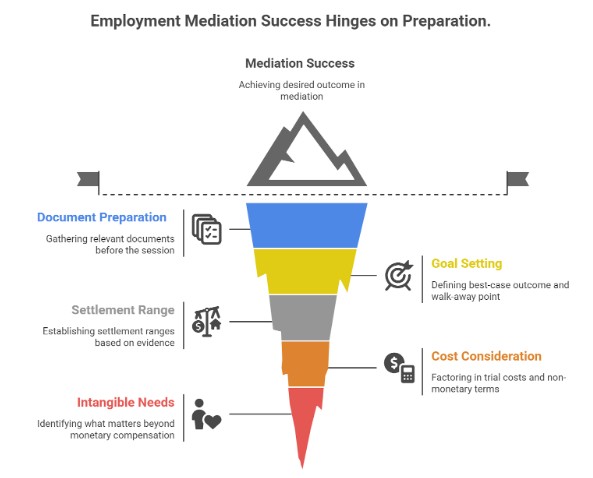
Success in mediation really depends on showing up with the right materials and having clear, achievable goals based on the strengths and weaknesses of your case.
Gather all relevant documents before the session. Think employment contracts, offer letters, handbooks, and company policies.
Performance reviews, disciplinary records, and any written communication about the dispute are must-haves. Pay stubs, tax forms, and lost wage records help prove damages.
If the dispute involves emotional distress or injuries, bring medical records and bills. Any evidence supporting your claims or defenses should be organized and easily accessible.
Preparing for employment mediations means paying attention to the details. Witness statements, emails, texts, and other messages help strengthen your side. Legal documents such as demand letters, EEOC charges, or court filings provide the mediator with context.
A simple timeline of events lets everyone see how the conflict unfolded. Bring a summary of your legal arguments and calculations for your settlement figures.
Before mediation, each side needs to know its best-case outcome and its walk-away point. The best outcome is what you hope for; the walk-away point is your minimum acceptable result.
Settlement ranges should match the evidence and the risks of going to court. Understanding how employment mediation works helps everyone size up their position. If your evidence is shaky or the law isn’t clear, you might want to be more flexible.
Factor in the real costs of taking a case to trial. Legal fees, expert witnesses, and lost time can add up fast—sometimes more than what’s at stake. Non-monetary terms, like a neutral reference or confidentiality, can matter just as much as money.
It’s worth thinking about what you really care about beyond the cash. Some employees value a workplace change or acknowledgment of wrongdoing more than a check.
Finding a good mediator means checking specific qualifications and knowing when to call in a pro. The mediator’s background and timing can make or break a settlement.
Florida Supreme Court certification indicates that the mediator has the necessary training. That means they understand the legal side and the process itself.
Experience in employment law usually matters more than just general mediation experience. Try to find mediators who’ve handled cases like yours—discrimination, harassment, wage disputes, whatever fits.
Mediators have different styles. Some step in with suggestions and keep things moving. Others prefer just to facilitate, letting both sides talk it out and find their own answers.
Ask mediators about their track record and how they deal with tough emotions. The best ones stay neutral but make sure everyone feels heard.
They should lay out their process, answer your questions about confidentiality, costs, and how long things typically take.
It’s smart to bring in a mediator early. That way, minor issues don’t spiral into legal messes.
If direct talks between employees or management go nowhere, it’s time for mediation. You don’t want to wait until everyone’s frustrated or digging in their heels.
Mediation works well for discrimination, harassment, and retaliation claims before things get too formal. It can also step in for contract disputes or fights over how someone got terminated.
Policy arguments? Mediation can handle those, too. Sometimes you just need a neutral person to cut through the noise.
When you notice tensions start to drag down productivity, or if someone starts talking about lawsuits, don’t wait—call a mediator. The process costs less than litigation and usually wraps up fast.
Most employment mediations in Florida finish in just one or two sessions, which is a relief for everyone involved.
If you wait too long, people can get stubborn, and legal deadlines might sneak up on you. It’s just easier to start mediation when folks still want to fix things.
The Mediation Group helps Florida employers and employees resolve workplace disputes privately, protect reputations, and move forward with durable agreements. Schedule an appointment.
What is employment mediation in Florida?
Employment mediation in Florida is a voluntary process where a neutral mediator helps employers and employees resolve workplace disputes without going to court. The mediator facilitates discussion and negotiation but does not decide who is right or wrong.
How is employment mediation different from filing a lawsuit?
Mediation is informal, confidential, and usually much faster and cheaper than litigation. Many cases resolve in a single session or within a few months, while investigations and court cases can take much longer.
Is EEOC or FCHR mediation mandatory for Florida workplace complaints?
No. EEOC and Florida Commission on Human Relations (FCHR) mediation is strongly encouraged but voluntary—both sides must agree to participate. If mediation doesn’t happen or doesn’t settle the case, the investigation or legal process continues.
How long does employment mediation usually take in Florida?
Most employment mediations are scheduled as half- or full-day sessions. EEOC data shows that charges resolved through mediation typically conclude in a few months, far more quickly than full investigations or lawsuits.
How much does employment mediation cost compared to litigation?
EEOC and FCHR mediation are offered at no cost to the parties, while private mediation involves mediator fees but is still generally far less expensive than a full lawsuit. Litigation often results in extended attorneys’ fees, discovery costs, and multiple hearings over many months.
What kinds of workplace disputes can be resolved through mediation?
Mediation can address discrimination and harassment claims, retaliation, wrongful termination, wage and overtime disputes, accommodation issues, and broader workplace relationship conflicts.
Do I need a lawyer for employment mediation in Florida?
You’re not required to have a lawyer for mediation, but many employees and employers choose to get legal advice before or during the process. An attorney can help you understand your rights, evaluate settlement options, and review any agreement before you sign.